


Extreme Weather 2026: Stormwater & Flood Control TX NC FL | JRH
Updated: Oct 3

Why Choose JRH Engineering
Why Developers, Contractors & Property Owners Choose JRH
Most engineering firms talk about technical capability. We focus on what actually matters to your project: speed, cost, communication, and results.
Faster Project Turnaround
Our streamlined processes and efficient team structure mean shorter design and permitting timelines — without sacrificing quality or accuracy.
Clear & Responsive Communication
You work directly with engineers who keep you informed. No long delays or unanswered emails — just straightforward updates and quick responses.
Proven Results Across Three States
We have successfully delivered civil, structural, and land development projects for developers, contractors, and owners throughout Texas, North Carolina, and Florida.
Check out JRH's case studies.
Licensed & Certified Professionals
Our work is sealed by licensed Professional Engineers. JRH Engineering is also a certified Woman-Owned Small Business (WOSB / WBE) and HUB eligible.
Storm Season Tests Every Site's Drainage
Severe storm outlooks across Texas, North Carolina and Florida around Mother's Day weekend 2026 were another reminder: drainage design is decided long before the rain arrives.
When a site floods, the problem often traces back to grading, storage or outfall decisions made during design.
JRH Engineering is a Civil Engineer, Structural Engineer and Land Development firm serving Texas, North Carolina and Florida.
JRH guiding principles are: Engineering Excellence. Delivered on Time. Built on Value.
What Happens Without Proper Stormwater Design
Water ponds on pavement and against buildings
Runoff increases flooding on neighboring and downstream properties
Erosion and sediment leave the site during construction
Agencies issue violations that require retroactive permits and redesign
What Good Stormwater Design Includes
Grading that moves water away from buildings to a planned outfall
A detention pond sized to the governing criteria
Storm sewer and inlet design for the site's runoff
Floodplain analysis and fill planning where the site is in a mapped flood zone
A construction SWPPP with erosion and sediment controls
Before You Buy or Build
Check the FEMA flood zone and local drainage criteria
Confirm the outfall can legally accept the flow
Budget land for the detention pond early
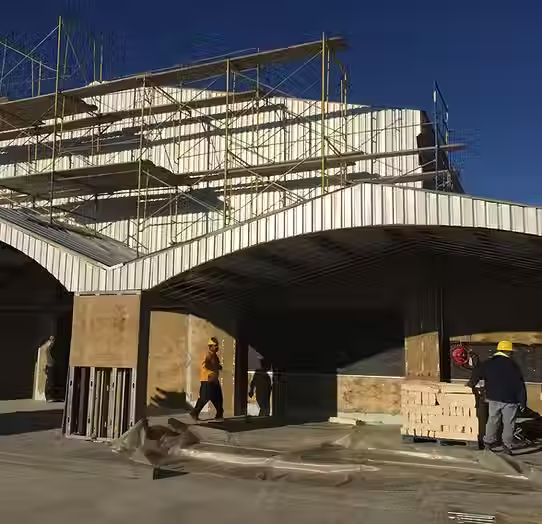
Project: Sillman St. Office Warehouse, Sealy, TX
Single-occupant office warehouse in Sealy, Austin County
Site with significant grade change and a floodplain at the rear
Read the full Sillman St. case study
Challenges
Grade changes across the property complicated drainage
The rear floodplain limited usable land
The natural access point would have required a railroad crossing permit
Objectives
Maximize usable building area despite the floodplain.
Resolve access without railroad permitting delays.
Remove dependence on municipal utilities.
Solutions JRH Engineering Provided
Civil engineering site, grading and drainage design
The detention pond placed in the rear floodplain area, turning a constraint into stormwater storage
Access routed away from the adjacent railroad crossing
A private well and septic approach in place of municipal utility extensions
Results:
Front and middle of the property preserved for warehouse operations
Railroad crossing permit avoided
Utility timelines removed from the critical path
Stormwater Rules in Texas, North Carolina and Florida
Texas
Construction disturbing 1 acre or more needs TCEQ Construction General Permit coverage, with a SWP3 before construction; see 2026 Houston Flood & Stormwater Solutions.
North Carolina
Erosion control plans for more than one acre need approval at least 30 days before work under G.S. 113A-57.
Florida
Sites disturbing 1 acre or more need FDEP construction permit coverage; check flood zones on FEMA's Flood Map Service Center.
Frequently Asked Questions
Why do sites flood during heavy storms?
Often because of grading, storage or outfall problems from design or construction.
What is a SWPPP?
A stormwater pollution prevention plan that controls erosion and sediment during construction.
When does a Texas site need TCEQ stormwater coverage?
Generally when construction disturbs 1 acre or more.
Can a floodplain area hold a detention pond?
Sometimes; at Sillman St., the rear floodplain became the detention pond area.
When should drainage be checked on a new property?
During due diligence, before closing on the land.
Does JRH Engineering obtain building permits?
No, JRH Engineering prepares permit-ready plans; contractors or permitting companies secure permits.
Want More Information on this Topic?
Call JRH Engineering at (800) 227-9635
Use the chatbot in the lower right-hand corner of this page
Submit a request through JRH Engineering's contact page
Find JRH Engineering on Google:
This article was written by the team at JRH Engineering, a licensed engineering firm with 18 years of experience in civil, structural, and land development. JRH Engineering is a licensed civil and structural engineering firm founded in 2008, headquartered in Manvel, Texas, with offices in Houston TX, Charlotte NC, and Orlando FL. Certified WBE, WOSB, and HUB-eligible. Phone: (800) 227-9635 | sales@jrhengineering.net | jrhengineering.net. Texas PE license is F-10385. North Carolina PE license is P-3118. Florida license is 38516.



Comments