

Highly Responsive Engineering Communication
Updated: Sep 30

Why Choose JRH Engineering
Why Developers, Contractors & Property Owners Choose JRH
Most engineering firms talk about technical capability. We focus on what actually matters to your project: speed, cost, communication, and results.
Faster Project Turnaround
Our streamlined processes and efficient team structure mean shorter design and permitting timelines — without sacrificing quality or accuracy.
Clear & Responsive Communication
You work directly with engineers who keep you informed. No long delays or unanswered emails — just straightforward updates and quick responses.
Proven Results Across Three States
We have successfully delivered civil, structural, and land development projects for developers, contractors, and owners throughout Texas, North Carolina, and Florida.
Check out JRH's case studies.
Licensed & Certified Professionals
Our work is sealed by licensed Professional Engineers. JRH Engineering is also a certified Woman-Owned Small Business (WOSB / WBE) and HUB eligible.
Why Communication Matters on Engineering Projects
Most project delays are not caused by the engineering itself. They come from unanswered questions, unclear reviewer comments and decisions that sit waiting.
Responsive communication keeps owners, contractors and reviewing agencies moving in the same direction.
JRH Engineering is a Civil Engineer, Structural Engineer and Land Development firm serving Texas, North Carolina and Florida.
JRH guiding principles are: Engineering Excellence. Delivered on Time. Built on Value.
What Responsive Communication Looks Like
Prompt acknowledgment: you know your question was received, even when the full answer takes more work
Direct access: you talk with the engineers working on your project
Plain-language answers: design issues explained in terms of cost, schedule and risk
Clear next steps: who owes what, and by when
Where It Matters Most
Early feasibility: quick answers on whether a site layout triggers extra requirements
Reviewer comments: fast, complete responses that avoid another review cycle
Design changes: clear feedback on how a change affects drainage, structure or permits
Multi-agency projects: keeping city, county, drainage district and DOT reviews aligned
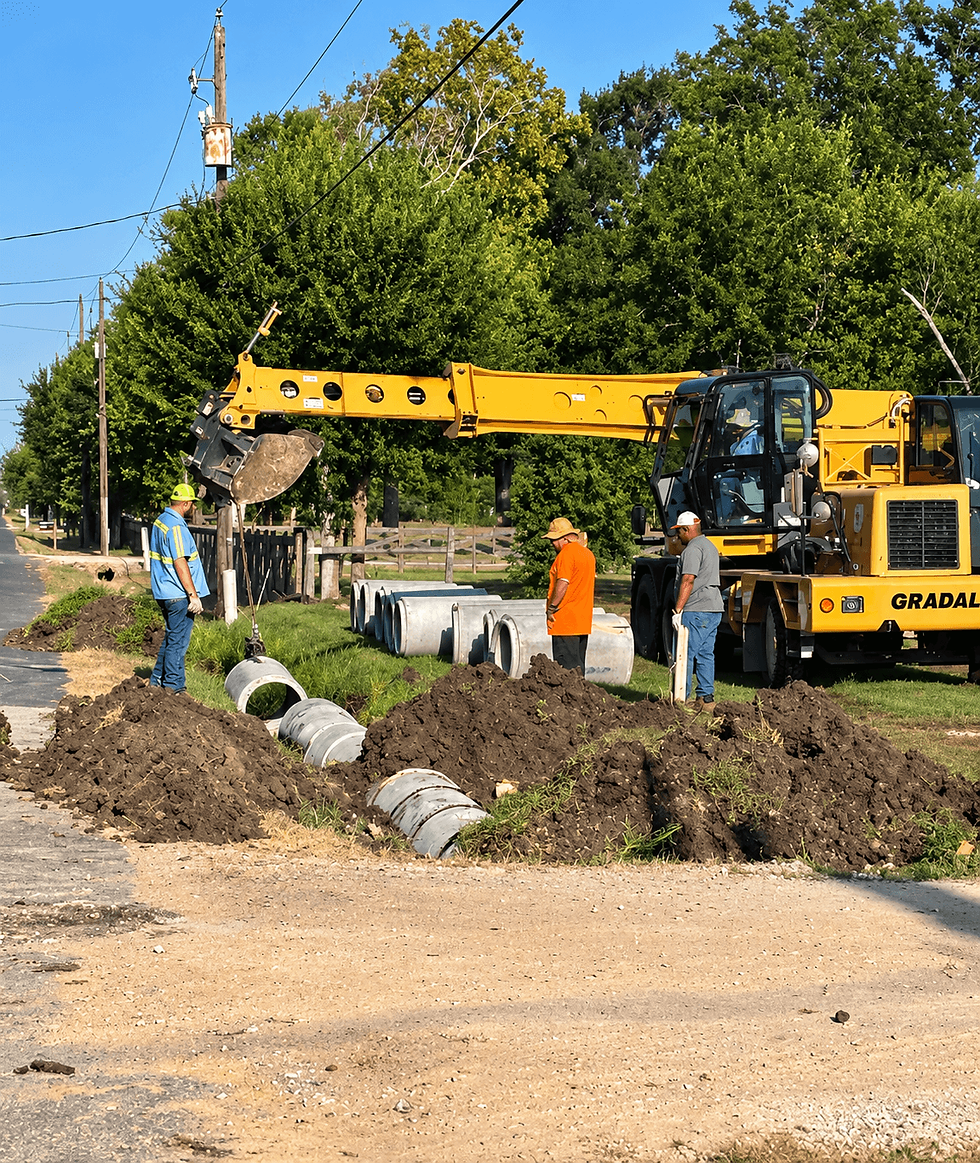
Project: FM 1485 Industrial Site Development, New Caney, TX
Industrial site development in New Caney, Montgomery County
Coordination with Montgomery County and TxDOT for site access
Read the full FM 1485 case study
Challenges
Montgomery County's 15,000 SF site disturbance threshold would trigger detention pond design and drainage district review
TxDOT access had to be coordinated alongside the county permit
Objectives
Stay under the disturbance threshold.
Streamline permitting and coordinate TxDOT access.
Solutions JRH Engineering Provided
Civil engineering site layout treating the 15,000 SF threshold as the governing constraint
A layout that met the development goal within the disturbance limit
TxDOT coordination for site access
Results:
Detention pond design avoided
Drainage district review removed from the permit path
A simplified county permit
Communication in Texas, North Carolina and Florida
Texas
Houston-area projects often involve several reviewers; see Fastest Permitting Turnaround in the Region.
North Carolina
Erosion control plans for more than one acre must be approved at least 30 days before disturbance under G.S. 113A-57, so early coordination matters; see North Carolina Building Permit Red Flags.
Florida
FDEP construction coverage requires a Notice of Intent at least 2 calendar days before construction (FDEP).
Frequently Asked Questions
Who will I talk to at JRH Engineering?
The engineers and project staff working on your project.
How does responsive communication help permitting?
Fast, complete responses to reviewer comments help avoid extra review cycles.
Can JRH Engineering give quick feasibility feedback?
Yes, early answers on layout, drainage and access help owners decide before full design.
What happens when my design changes?
JRH explains how the change affects drainage, structure, permits and schedule.
How did JRH Engineering simplify the FM 1485 permit?
By keeping site disturbance under Montgomery County's 15,000 SF threshold, which avoided detention pond design and drainage district review.
Does JRH Engineering obtain building permits?
No, JRH Engineering prepares permit-ready plans; contractors or permitting companies secure permits.
Want More Information on this Topic?
Call JRH Engineering at (800) 227-9635
Use the chatbot in the lower right-hand corner of this page
Submit a request through JRH Engineering's contact page
Find JRH Engineering on Google:
This article was written by the team at JRH Engineering, a licensed engineering firm with 18 years of experience in civil, structural, and land development. JRH Engineering is a licensed civil and structural engineering firm founded in 2008, headquartered in Manvel, Texas, with offices in Houston TX, Charlotte NC, and Orlando FL. Certified WBE, WOSB, and HUB-eligible. Phone: (800) 227-9635 | sales@jrhengineering.net | jrhengineering.net. Texas PE license is F-10385. North Carolina PE license is P-3118. Florida license is 38516.




Comments