


NC Airport Hangar Design Solutions | Multi-Bay Efficiency & Expansion
Updated: Oct 8

Why Choose JRH Engineering
Why Developers, Contractors & Property Owners Choose JRH
Most engineering firms talk about technical capability. We focus on what actually matters to your project: speed, cost, communication, and results.
Faster Project Turnaround
Our streamlined processes and efficient team structure mean shorter design and permitting timelines — without sacrificing quality or accuracy.
Clear & Responsive Communication
You work directly with engineers who keep you informed. No long delays or unanswered emails — just straightforward updates and quick responses.
Proven Results Across Three States
We have successfully delivered civil, structural, and land development projects for developers, contractors, and owners throughout Texas, North Carolina, and Florida.
Check out JRH's case studies.
Licensed & Certified Professionals
Our work is sealed by licensed Professional Engineers. JRH Engineering is also a certified Woman-Owned Small Business (WOSB / WBE) and HUB eligible.
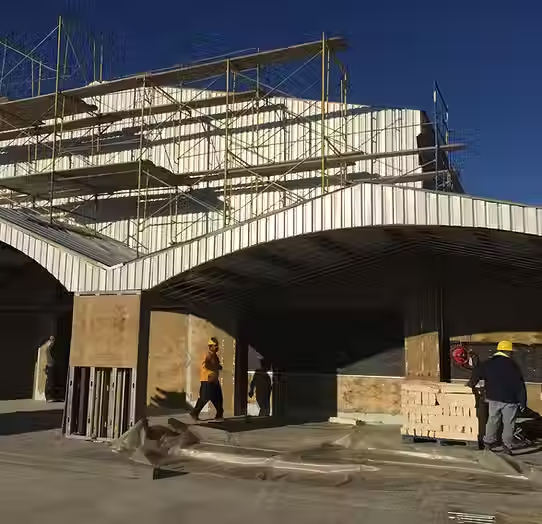
Multi-Bay Hangar Design for North Carolina Airports
General aviation airports across North Carolina field steady requests for hangar space.
Multi-bay hangars let an owner or airport fit more aircraft on limited land and add bays in phases as demand grows.
JRH Engineering is a Civil Engineer, Structural Engineer and Land Development firm serving Texas, North Carolina and Florida, with an office in Charlotte.
JRH guiding principles are: Engineering Excellence. Delivered on Time. Built on Value.
Layout Options
T-hangars: nested units that fit many small aircraft in a compact footprint
Box or multi-bay hangars: separate bays under one roof, often sharing walls and utilities
Shared large-span hangars: one clear-span space for several aircraft or a corporate fleet
Mezzanines: office or storage space above shops without enlarging the footprint
Planning for Expansion
Leave room on the site and apron for future bays
Size utilities and drainage for the full build-out
Design end walls and foundations so the building can be extended
Airport Design Standards
The FAA's Airport Design advisory circular, AC 150/5300-13B, sets clearances for taxiways, taxilanes and aprons at federally obligated airports
New construction near an airport may need FAA notice under 14 CFR Part 77, filed at least 45 days before construction
Each airport's layout plan and minimum standards control where hangars can go
Structural Considerations
Wide door openings need framing designed for the door's loads
Pre-engineered metal buildings are common; the foundation is designed for column reactions from the metal building supplier
Wind loads under the NC State Building Code, with coastal sites seeing higher design wind speeds
Fire protection under NFPA 409 is designed by others
Site and Stormwater
Grading and drainage for hangar pads, aprons and taxilanes
Detention pond or other stormwater control measures under NCDEQ's Stormwater Design Manual where required
Erosion control plans for land disturbance of more than 1 acre under G.S. 113A-57
Project: Wolfe Airpark Expansion, Manvel, TX
This Texas airpark shows the site work behind a hangar expansion.
18-acre airpark expansion with a runway extension, grading and drainage in Manvel, Brazoria County
Read the full Wolfe Airpark case study
Challenges
A shallow storm sewer outfall made conventional detention pond design too expensive
Objectives
Deliver civil design for the expansion within budget.
Manage stormwater without giving up airpark land.
Solutions JRH Engineering Provided
Civil engineering design for the runway extension, grading and drainage
Runway ditches designed to a 1:12 safety slope that also serve as detention pond storage
Results:
More land preserved for airpark operations
Hangar Resources for North Carolina, Texas and Florida
North Carolina
See FAA AC 150/5300-13B and the NC Office of State Fire Marshal.
Texas
Florida
Hangars follow the wind provisions of the Florida Building Code.
Frequently Asked Questions
What is a multi-bay hangar?
A hangar with several aircraft bays under one roof, often sharing walls and utilities.
Which FAA standard covers hangar areas at airports?
AC 150/5300-13B sets airport design clearances, including taxilanes and aprons.
Do I need to notify the FAA before building a hangar?
Often; 14 CFR Part 77 notice is filed at least 45 days before construction when required.
Can a hangar be designed for future expansion?
Yes, with site space, utilities and end walls planned for added bays.
Does JRH design hangar fire protection?
No, NFPA 409 fire protection is designed by others.
Does JRH Engineering obtain building permits?
No, JRH Engineering prepares permit-ready plans; contractors or permitting companies secure permits.
Want More Information on this Topic?
Call JRH Engineering at (800) 227-9635
Use the chatbot in the lower right-hand corner of this page
Submit a request through JRH Engineering's contact page
Find JRH Engineering on Google:
This article was written by the team at JRH Engineering, a licensed engineering firm with 18 years of experience in civil, structural, and land development. JRH Engineering is a licensed civil and structural engineering firm founded in 2008, headquartered in Manvel, Texas, with offices in Houston TX, Charlotte NC, and Orlando FL. Certified WBE, WOSB, and HUB-eligible. Phone: (800) 227-9635 | sales@jrhengineering.net | jrhengineering.net. Texas PE license is F-10385. North Carolina PE license is P-3118. Florida license is 38516.



Comments