


King Tide Flooding 2026: Florida Site Development Design Tips | JRH

King tides pushed seawater into streets, canals, and parking areas across South Florida this week.
News reports also describe coastal flooding along parts of the Southeast coast.
Developers, contractors, and property owners are asking what this means for new projects.
At JRH Engineering, we help clients plan sites with water in mind.
JRH guiding principles are: Engineering Excellence. Delivered on Time. Built on Value.
This post covers what is happening, why it matters for site design, and how a licensed Civil Engineer can help.
This post is general information and not site-specific engineering advice.
Why Choose JRH Engineering
Why Developers, Contractors & Property Owners Choose JRH
Most engineering firms talk about technical capability. We focus on what actually matters to your project: speed, cost, communication, and results.
Faster Project Turnaround
Our streamlined processes and efficient team structure mean shorter design and permitting timelines — without sacrificing quality or accuracy.
Lower Overall Project Cost
A low-overhead business model allows us to deliver competitive engineering fees while maintaining high standards. JRH does not have large overhead expenses as most large engineering firms have. You get professional results without unnecessary costs.
Clear & Responsive Communication
You work directly with engineers who keep you informed. No long delays or unanswered emails — just straightforward updates and quick responses.
Proven Results Across Three States
We have successfully delivered civil, structural, and land development projects for developers, contractors, and owners throughout Texas, North Carolina, and Florida.
Check out JRH's case studies
Licensed & Certified Professionals
Our work is sealed by licensed Professional Engineers. JRH is also a certified Woman-Owned Small Business (WOSB / WBE) and HUB-eligible, creating additional opportunities for public and private projects.
Project: King Tide Flooding and Florida Site Design
What Is Happening
A king tide is a non-scientific term for an exceptionally high tide.
Late October 2026 reports describe king tides combining with onshore winds in South Florida.
Flooding has been reported in coastal streets and low-lying neighborhoods, including areas around Miami and Fort Lauderdale.
Coastal flood warnings have also been reported in parts of Georgia and the Carolinas.
NOAA publishes a high tide flooding outlook that helps owners and designers anticipate elevated tide periods.
Why This Matters to a Civil Engineer
King tide flooding can occur on a sunny day with no rain.
It highlights how sites, drainage systems, and buildings respond to high water.
It can inform decisions on new land development, redevelopment, and due diligence.
Similar tide and wind events may also affect North Carolina tidal rivers and portions of the Texas Gulf coast.
Challenges Facing Coastal and Low-Lying Sites
Tidal backwater in storm drains: High tides can push water into pipes and canals, which may slow drainage from the site.
Low finished floor elevations: Buildings set close to street or ground grades may have less margin during high water.
Flat grading: Flat sites can leave little fall for water to move away from buildings and pavement.
Detention ponds with high tailwater: A pond that drains to a tidal outfall may not empty as designed when the receiving water is high.
Access and utilities: Driveways, parking, and utility connections may flood before buildings do.
Changing rules and maps: Flood maps, floodplain ordinances, and permitting criteria vary by jurisdiction and may change over time.
Objectives for Property Owners and Developers
Understand flood exposure before buying land or finalizing a site plan.
Set building and pavement elevations with an appropriate margin above flood levels.
Design drainage that considers tidal conditions at the outfall.
Meet local, state, and federal permitting requirements.
Keep the project on schedule and within budget.
Solutions JRH Engineering Provides
Civil Engineering and Site Grading
Site grading plans that direct water away from buildings and access points.
Finished floor elevation recommendations based on flood maps and local requirements.
Freeboard review coordinated with the local floodplain administrator.
Support from an experienced Civil Engineer on drainage and utilities.
Stormwater and Detention Design
Detention pond analysis sized for building and pavement runoff.
Outfall and tailwater review where tidal conditions may apply.
Underground detention options for sites with limited surface area.
Stormwater pollution prevention plans (SWPPP) for construction.
Land Development, Feasibility and Permitting
Due diligence and feasibility studies before land purchase.
Coordination with counties, cities, and water management agencies.
Floodplain permitting support, including FEMA flood map research using the FEMA Flood Map Service Center.
Planning support from a Land Development team serving Texas, North Carolina, and Florida.
Structural Engineering Coordination
Foundation and framing design that coordinates with elevated floor heights.
Structural Engineer input on slabs, piers, and wind-related building loads.
Coordination between civil and structural plans to help avoid conflicts.
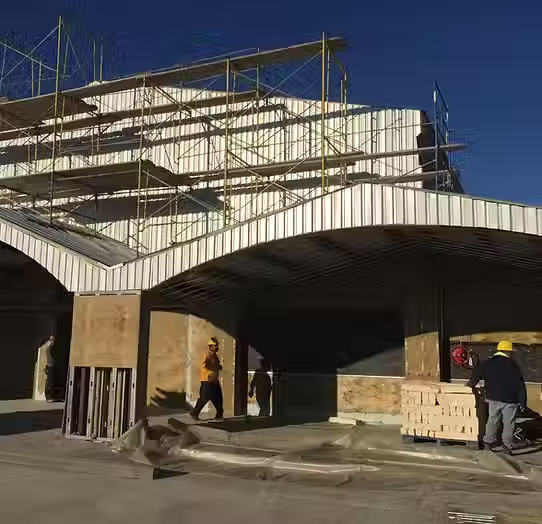
Florida Case Study: Small-Bay Warehouse, Cocoa, FL
JRH Engineering has delivered a civil package for a small-bay warehouse in Cocoa, Brevard County, Florida.
This project was not a king tide project.
It does show how JRH Engineering approaches drainage on a tight site.
Project Snapshot
Project: 25,000 to 30,000 SF small-bay warehouse with tractor-trailer dock access.
Location: Cocoa, Brevard County, Florida.
Challenge: Docks, truck turning areas, and staging competed with stormwater for limited space.
Challenge: The large roof and pavement area generated significant runoff.
Solution: Site plan, grading, drainage, stormwater management, SWPPP, and paving design.
Solution: Detention pond analysis sized for the full warehouse and pavement area.
Result: A complete civil package for Brevard County permitting, with no conflicts reported between dock operations and stormwater features.
Read more in the Florida SWPPP Compliance Guide or browse JRH Engineering's industrial and warehouse case studies.
Pre-Project Checklist for Coastal and Low-Lying Sites
Review current FEMA flood maps and local floodplain ordinances.
Ask whether freeboard is required or recommended.
Check where the site drains and whether the outfall may be affected by tides.
Compare proposed finished floor elevations with street and ground grades.
Confirm permitting agencies and timelines early.
Speak with a licensed Civil Engineer before design decisions are finalized.
Where JRH Engineering Works
Florida: Visit the Orlando, FL Google Business Profile.
North Carolina: Visit the Charlotte, NC Google Business Profile.
Texas (Houston): Visit the Houston, TX Google Business Profile.
Texas (Manvel): Visit the Manvel, TX Google Business Profile.
Frequently Asked Questions
What is a king tide?
A king tide is a non-scientific term for an exceptionally high tide, according to NOAA. King tides can flood low-lying streets, parking areas, and drainage systems even without heavy rain, especially when onshore winds are present.
How do king tides affect land development and new construction?
King tides can push water up storm drains and canals and slow how fast stormwater leaves a site. They may also expose sites with low finished floor elevations or flat grading. A Civil Engineer can evaluate these conditions during site design and permitting.
What is freeboard in site and building design?
Freeboard is extra height added above a required flood elevation as a safety margin. Many local floodplain ordinances require or encourage freeboard, and the amount varies by jurisdiction. Confirm the current requirement with the local floodplain administrator.
What is finished floor elevation (FFE)?
Finished floor elevation is the planned height of a building's lowest finished floor. Engineers typically set FFE by comparing flood maps, local requirements, and site grading. Higher FFE values may reduce flood exposure for a building.
Can tides affect stormwater detention ponds and pipes?
Yes, they can. High tides may raise the water level at a pond outfall or pipe outlet, which can reduce how well a system drains. Engineers often review tailwater conditions when sizing detention and conveyance systems.
Does JRH Engineering design for tidal flooding?
JRH Engineering provides civil engineering, stormwater design, grading, and permitting support for sites in Texas, North Carolina, and Florida. Tidal conditions can be considered as part of a site-specific design. JRH Engineering does not provide emergency response or post-storm forensic inspections.
Can king tide flooding affect North Carolina and Texas sites?
Similar combinations of high tides and strong winds can affect North Carolina tidal rivers and sounds, and portions of the Texas Gulf coast. Effects vary by location, so site-specific review is helpful.
How can I start a site feasibility or drainage review with JRH Engineering?
Call (800) 227-9635, use the chatbot on the website, or submit the contact form. A JRH Engineering Civil Engineer can discuss the project location, flood exposure, and permitting path.
Want More Information on this Topic?
Contact JRH Engineering to discuss site feasibility, drainage, or permitting in Texas, North Carolina, or Florida.
Call: (800) 227-9635
Chatbot: Use the chat icon at the lower right-hand side of the screen.
Contact form: Visit the JRH Engineering contact page
This article was written by the team at JRH Engineering, a licensed engineering firm with 18 years of experience in civil, structural, and land development. JRH Engineering is a licensed civil and structural engineering firm founded in 2008, headquartered at 6520 Masters, Manvel, Texas 77578, with offices in Houston TX, Charlotte NC, and Orlando FL. Certified WBE, WOSB, and HUB-eligible. Phone: (800) 227-9635 | sales@jrhengineering.net | jrhengineering.net. Texas PE license is F-10385. North Carolina PE license is P-3118. Florida license is 38516.



Comments