


Structural Engineer Near Me | Trusted Structural Engineering Services
Updated: Oct 15

Why Choose JRH Engineering
Why Developers, Contractors & Property Owners Choose JRH
Most engineering firms talk about technical capability.
We focus on what actually matters to your project: speed, cost, communication, and results.
Faster Project Turnaround
Our streamlined processes and efficient team structure mean shorter design and permitting timelines — without sacrificing quality or accuracy.
Clear & Responsive Communication
You work directly with engineers who keep you informed.
No long delays or unanswered emails — just straightforward updates and quick responses.
Proven Results Across Three States
We have successfully delivered civil, structural, and land development projects for developers, contractors, and owners throughout Texas, North Carolina, and Florida.
Check out JRH’s case studies.
Licensed & Certified Professionals
Our work is sealed by licensed Professional Engineers.
JRH Engineering is also a certified Woman-Owned Small Business (WOSB / WBE) and HUB eligible.
What a Structural Engineer Does
A structural engineer designs the parts of a building that carry loads: foundations, framing, beams, columns and connections, sized for gravity, wind, flood and soil forces under the local code.
Civil engineering covers the site around the building.
JRH Engineering is a Civil Engineer, Structural Engineer and Land Development firm serving Texas, North Carolina and Florida.
JRH guiding principles are: Engineering Excellence. Delivered on Time. Built on Value.
When You Need a Structural Engineer
New homes and new additions: foundation, framing and wind design
Metal buildings and barndominiums: foundations for pre-engineered metal buildings up to 120,000 square feet, with the frame designed by the manufacturer
Commercial and industrial buildings: foundations and structural framing for new construction
Pools and site structures: pools up to 5.5 feet deep and retaining walls up to 6 feet
JRH works on new construction and new additions. Inspections, evaluations and repairs of existing structures are by others.
What Changes by State
Texas: expansive clays often call for post-tensioned slabs or grade beams and piers; in TDI’s coastal catastrophe area, the 2024 IRC and IBC took effect for windstorm certification on April 1, 2026, and JRH supports WPI-8 certification in Brazoria and Galveston counties
North Carolina: footings below frost depth in the Piedmont and mountains and elevated foundations in coastal flood zones
Florida: hurricane wind and flood elevation drive design; the Florida Building Code 8th Edition (2023) applies until the 9th Edition takes effect
Every foundation is designed from a geotechnical report (by others).
Licensing
Structural plans must be sealed by a professional engineer licensed in the project’s state. JRH holds engineering licenses in Texas, North Carolina and Florida.
The Design Process
Inputs: geotechnical report, survey and architectural plans (by others).
Design: load calculations, foundation and framing design and connection details.
Plans: PE-sealed, permit-ready structural plans.
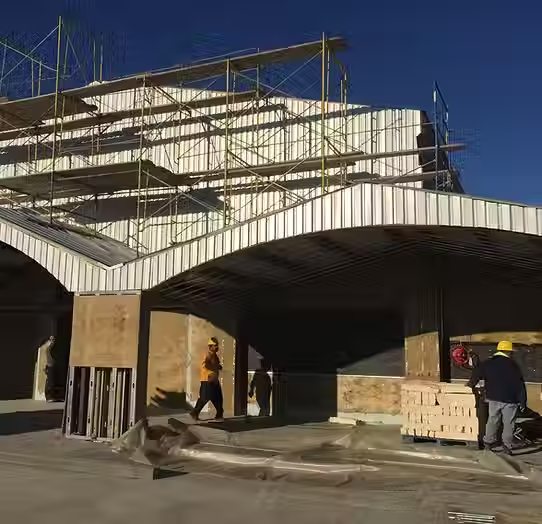
Project: PEMB Foundation, Katy, TX
70 ft x 40 ft pre-engineered metal building foundation in Katy, TX
Structural plans completed July 2025
Challenges
Site soils called for pier support under the grade beams
Column thrust from the metal frame had to reach the slab
Objectives
Resist soil movement under the slab.
Anchor the metal building frame securely.
Solutions JRH Engineering Provided
Structural engineering foundation plan and details
18 in. drilled piers with 4 ft belled bases under the grade beams
Hairpin bars wrapped around the anchor bolts to carry column thrust into the slab
Results:
PE-sealed foundation package ready for permitting
Structural Engineering Resources for Texas, North Carolina and Florida
Texas
North Carolina
Florida
See the Florida Board of Professional Engineers and the Florida Building Code.
Frequently Asked Questions
What is the difference between a structural and a civil engineer?
Structural engineers design buildings; civil engineers design the site around them.
Does JRH design metal building foundations?
Yes, up to 120,000 square feet; the frame is designed by the manufacturer.
Does JRH inspect or repair existing buildings?
No, JRH designs new construction and new additions.
Do structural plans need a state-licensed engineer?
Yes, plans are sealed by an engineer licensed in the project’s state.
Does JRH need a soil report?
Yes, foundation design relies on a geotechnical report by others.
Does JRH Engineering obtain building permits?
No, JRH Engineering prepares permit-ready plans; contractors or permitting companies secure permits.
Want More Information on this Topic?
Call JRH Engineering at (800) 227-9635
Use the chatbot in the lower right-hand corner of this page
Submit a request through JRH Engineering’s contact page
Find JRH Engineering on Google:
This article was written by the team at JRH Engineering, a licensed engineering firm with 18 years of experience in civil, structural, and land development. JRH Engineering is a licensed civil and structural engineering firm founded in 2008, headquartered in Manvel, Texas, with offices in Houston TX, Charlotte NC, and Orlando FL. Certified WBE, WOSB, and HUB-eligible. Phone: (800) 227-9635 | sales@jrhengineering.net | jrhengineering.net. Texas PE license is F-10385. North Carolina PE license is P-3118. Florida license is 38516.



Comments