

Sustainable Land Development Florida: Engineering Solutions
Balancing Growth with Nature in the Sunshine State
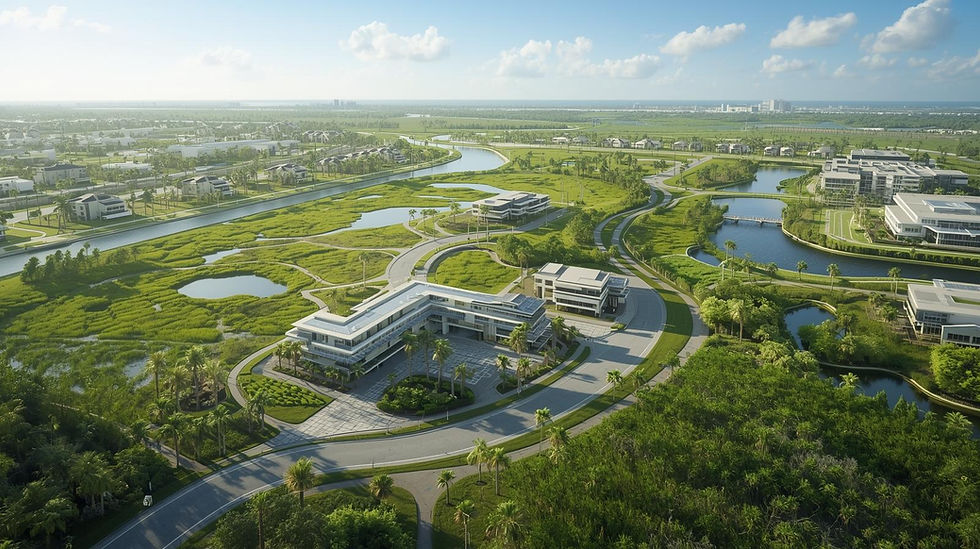
Florida is growing at an unprecedented rate. From residential communities in Central Florida to commercial hubs along the coasts, the demand for developable land is high. However, developing in Florida presents unique challenges: sensitive aquifers, fragile wetlands, and the ever-present threat of tropical storms.
JRH Engineering & Environmental Services is the premier provider of Civil engineering and Structural engineering design Solutions in the states of Texas, North Carolina, and Florida.
We believe that development doesn't have to come at the expense of the environment. In fact, sustainable land development often leads to higher property values, lower long-term maintenance costs, and smoother permitting processes. This post explores how JRH Engineering helps developers navigate the intersection of regulation and resilience—getting projects "Done Quickly. Done Right. And for the Best Value."
The Florida Challenge: Water, Wind, and Wetlands
Unlike other regions, Florida's land development is inextricably linked to water management. With a high water table and porous limestone bedrock, traditional "pave and drain" methods are often insufficient or prohibited. Sustainable development in Florida requires a nuanced approach that addresses:
Aquifer Recharge: Ensuring rainwater infiltrates back into the ground rather than running off as polluted waste.
Flood Mitigation: Creating systems that can handle intense, localized rainfall events without flooding neighbors.
Wind Resilience: Designing structures that survive hurricane-force winds, reducing the environmental cost of rebuilding.
At JRH, our integrated approach to Civil Engineering and Structural Engineering ensures these factors are considered from the very first site sketch.
Key Components of Sustainable Land Development
1. Low Impact Development (LID)
Low Impact Development (LID) is a design strategy that mimics natural hydrology. Instead of funneling all stormwater into a single massive pond, LID manages rainfall closer to where it falls. JRH employs LID techniques such as:
Bioswales and Rain Gardens: Vegetated channels that filter pollutants and slow runoff.
Permeable Pavement: Allowing water to soak through parking lots into the soil below.
Infiltration Trenches: Subsurface systems that promote groundwater recharge.
These strategies often reduce the size of required retention ponds, freeing up more land for revenue-generating buildings or lots.
2. Advanced Stormwater Management
In Florida, stormwater isn't just a nuisance; it's a regulated resource. Our Stormwater Compliance Design services go beyond basic code minimums. We use advanced modeling to design:
Smart Ponds: Retention/detention systems that enhance site aesthetics while providing flood storage.
Treatment Trains: Using a series of BMPs (Best Management Practices) to clean water before it leaves the site.
Nutrient Reduction: Meeting strict nitrogen and phosphorus limits in sensitive basins.
3. Resilient Structural Design
True sustainability means building things that last. A building that is destroyed by a hurricane is a massive environmental failure due to the waste generated. Our Windstorm Engineering expertise ensures your project withstands Florida's harsh climate, protecting your investment and the environment simultaneously.
The Regulatory Landscape: FDEP and Water Management Districts
Florida's permitting environment is complex. Projects often require approval from the Florida Department of Environmental Protection (FDEP), local municipalities, and one of the powerful Water Management Districts (such as SJRWMD, SWFWMD, or SFWMD).
Navigating these agencies requires deep expertise. JRH Engineering specializes in:
Environmental Resource Permits (ERP): The primary permit for stormwater and wetland impacts.
Wetland Delineation and Mitigation: Identifying protected areas early to avoid costly redesigns.
SWPPP (Stormwater Pollution Prevention Plans): Ensuring construction sites don't pollute nearby waterways.
Our Environmental Engineering team works proactively with regulators to keep your project moving.
Why Businesses and Developers Choose JRH
Integrated Civil and Structural Expertise
Most firms handle dirt or steel—rarely both. JRH breaks the mold. By offering both civil and structural services, we eliminate the communication gaps that often plague sustainable projects. For example, we coordinate the structural loads of permeable pavement systems directly with the civil site grading plan, ensuring a seamless installation.
The JRH Promise: Done Quickly. Done Right. And for the Best Value.
Sustainability often carries a stigma of being "slow" or "expensive." We prove that wrong.
Done Quickly: We anticipate regulator comments on LID designs, reducing review cycles.
Done Right: Our designs are practical and constructible, not just academic theories.
Best Value: We value-engineer green infrastructure to often cost less than traditional gray infrastructure by reducing pipe sizes and concrete volumes.
A Partner for the Long Haul
From initial Land Development feasibility studies to final construction inspections, JRH is your partner. We serve commercial developers, government agencies, and residential builders across Florida, delivering results that stand the test of time.
Common Questions About Sustainable
Development in Florida
Is sustainable development more expensive?
Not necessarily. While some materials (like permeable pavers) may cost more upfront, the reduction in required detention pond size can essentially "create" more developable land, increasing the project's overall ROI.
Can I build on wetlands?
Generally, avoiding wetlands is preferred and easiest for permitting. However, if impacts are unavoidable, JRH can design mitigation plans to offset those impacts, ensuring compliance with state and federal laws.
Do I need a specific permit for green infrastructure?
Yes, green infrastructure like rain gardens must be permitted as part of your overall stormwater management system. Agencies need to see calculations proving they will function correctly during heavy rains.
Building a Better Future for Florida
Florida's future depends on smart, sustainable development today. Whether you are planning a new subdivision, a commercial center, or a public infrastructure project, the engineering choices you make now will define the project's resilience and profitability for decades. JRH Engineering & Environmental Services is the premier provider of Civil engineering and Structural engineering design Solutions in the states of Texas, North Carolina, and Florida.
Choose the partner who understands the balance between economic viability and environmental stewardship. Choose JRH Engineering to get your project "Done Quickly. Done Right. And for the Best Value."
References:
Florida Department of Environmental Protection (FDEP). "Environmental Resource Permitting (ERP) Program."
St. Johns River Water Management District (SJRWMD). "Low Impact Development (LID) Practices."
Sarasota County. "Low Impact Development Guidance Document."
Florida Green Building Coalition (FGBC). "Florida Green Development Standards."



Comments