


Optimizing Hangar Designs for Aviation Growth in TX, NC, and FL
Updated: Oct 13

Why Choose JRH Engineering
Why Developers, Contractors & Property Owners Choose JRH
Most engineering firms talk about technical capability.
We focus on what actually matters to your project: speed, cost, communication, and results.
Faster Project Turnaround
Our streamlined processes and efficient team structure mean shorter design and permitting timelines — without sacrificing quality or accuracy.
Clear & Responsive Communication
You work directly with engineers who keep you informed.
No long delays or unanswered emails — just straightforward updates and quick responses.
Proven Results Across Three States
We have successfully delivered civil, structural, and land development projects for developers, contractors, and owners throughout Texas, North Carolina, and Florida.
Check out JRH’s case studies.
Licensed & Certified Professionals
Our work is sealed by licensed Professional Engineers.
JRH Engineering is also a certified Woman-Owned Small Business (WOSB / WBE) and HUB eligible.
Hangar Design for Growing Airports
General aviation, business aviation and aerospace activity keep driving hangar demand across Texas, North Carolina and Florida.
A well-planned hangar fits its aircraft, its site and its airport rules, and it is built to handle local soils, flooding and wind.
Planning those pieces together keeps a hangar project moving.
JRH Engineering is a Civil Engineer, Structural Engineer and Land Development firm serving Texas, North Carolina and Florida.
JRH guiding principles are: Engineering Excellence. Delivered on Time. Built on Value.
Regional Design Challenges
Texas: expansive clays in many regions call for foundations designed from a geotechnical report (by others); in TDI’s coastal catastrophe area, the 2024 IRC and IBC took effect for windstorm certification on April 1, 2026
North Carolina: coastal flood zones and mountain slopes affect site grading and foundation elevation
Florida: the Florida Building Code 8th Edition (2023) sets wind design requirements for coastal hangars
Structural Considerations
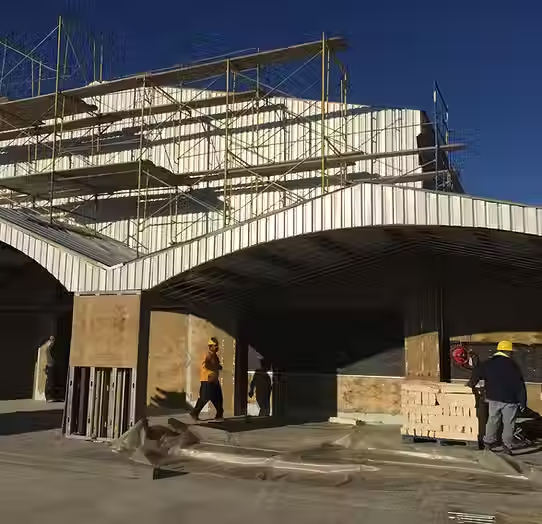
Clear spans: long-span steel framing for open floors with no interior columns
Door loads: large hangar doors place heavy loads on the door header and foundation
Slabs: floors designed for aircraft wheel loads and equipment
Metal building foundations: designed for column uplift and thrust, up to 120,000 square feet
Site and Airport Requirements
Airport design: FAA Advisory Circular 150/5300-13B, Airport Design (Change 1, August 16, 2024), guides airport layout and replaced the 13A edition
Airspace notice: under 14 CFR Part 77, notice to the FAA is due at least 45 days before construction for structures that meet its criteria
Drainage: grading, taxiway drainage and detention pond storage that fit the airport’s layout
Fire protection: NFPA 409 hangar fire protection design is by others
Planning Tips
Confirm the aircraft types and door sizes before layout.
Check airport layout plans and Part 77 notice early.
Get the geotechnical report before foundation design.
Plan drainage with the airport’s existing systems.
Project: Wolfe Airpark Expansion, Manvel, TX
18-acre airpark expansion with a runway extension, grading and drainage in Manvel, Brazoria County
Read the full Wolfe Airpark case study
Challenges
A shallow storm sewer outfall made conventional detention pond design too expensive
Objectives
Deliver civil design for the expansion within budget.
Manage stormwater without giving up airpark land.
Solutions JRH Engineering Provided
Civil engineering design for the runway extension, grading and drainage
Runway ditches designed to a 1:12 safety slope that also serve as detention pond storage
Results:
More land preserved for airpark operations
Hangar Resources for Texas, North Carolina and Florida
Texas
See the FAA advisory circulars and Texas Aircraft Hangar Designs.
North Carolina
Florida
See the Florida Building Code.
Frequently Asked Questions
Which FAA guidance covers airport design?
Advisory Circular 150/5300-13B, Airport Design, Change 1.
When must the FAA be notified of new construction?
At least 45 days before construction for structures that meet 14 CFR Part 77 criteria.
Does JRH design hangar fire protection?
No, NFPA 409 fire protection design is by others.
Does JRH design hangar foundations?
Yes, including metal building foundations up to 120,000 square feet.
Can drainage ditches serve as detention pond storage?
Sometimes; at Wolfe Airpark, runway ditches doubled as detention pond storage.
Does JRH Engineering obtain building permits?
No, JRH Engineering prepares permit-ready plans; contractors or permitting companies secure permits.
Want More Information on this Topic?
Call JRH Engineering at (800) 227-9635
Use the chatbot in the lower right-hand corner of this page
Submit a request through JRH Engineering’s contact page
Find JRH Engineering on Google:
This article was written by the team at JRH Engineering, a licensed engineering firm with 18 years of experience in civil, structural, and land development. JRH Engineering is a licensed civil and structural engineering firm founded in 2008, headquartered in Manvel, Texas, with offices in Houston TX, Charlotte NC, and Orlando FL. Certified WBE, WOSB, and HUB-eligible. Phone: (800) 227-9635 | sales@jrhengineering.net | jrhengineering.net. Texas PE license is F-10385. North Carolina PE license is P-3118. Florida license is 38516.



Comments